Is minimalism about owning LESS or BEING LOCKED IN? Let's Discuss!

Approx 2.5 years ago, I made THIS POST on the Mudita Forum & although this “own nothing” idea was quite a different perspective, we talked about it in the context of minimalism & framed it largely through the rise of the shared economy. At the time, it felt like an interesting, maybe even optimistic shift. Less stuff, more access, more flexibility.

Over the weekend, I watched a very interesting news segment from Business Insider & I’m not sure that’s the direction we actually took.:

What this video show is that what we’ve seen instead is the quiet but aggressive expansion of subscriptions into almost everything. Not just media or software, but printers, cars, fitness equipment, sleep devices, even basic household tools. In many cases, you can still buy the physical object, but large parts of its functionality are locked behind ongoing payments. Sometimes permanently. The terms of service even say that YOU DO NOT OWN IT.

The video lays it our quite clearly: It’s not just that subscriptions add up financially, but that they fundamentally change the relationship between people and the things they use. You pay more over time, you never truly own what you paid for, and features can be limited, removed, or shut off entirely. Often without your consent.

We are now at the beginning of 2026 & 4 years from 2030 (the original deadline from the original article). The original promise of the shared economy was efficiency and freedom. Borrow instead of buy. Pay only when you need something. Reduce waste. However, that’s not what it’s turning into. This subscription model we’re living with now often does the opposite. It relies on inertia, unclear pricing, difficult cancellations, and long-term lock-in.

The good news is, that people are pushing back (even just a little). Over the last couple of years I’ve written about analog making a comeback (Vinyl records, pocket digital cameras + 35mm film etc) PLUS, physical books are thriving (Barnes & Noble opened over 60 new stores in 2025 and planning another 60 in 2026). Offline software, buy-once apps, and devices that work without constant connectivity are finding their audience again.

So, as always, I’m curious how this lands with you guys:

  • Do subscriptions feel convenient or constraining in your daily life?
  • Have you noticed things you once owned becoming services you now rent?
  • Where do you personally draw the line between access and ownership?
  • Do you see a real pushback coming, or are we too far down this path?

I’d love to hear how your perspective has changed since 2023, or if it hasn’t changed at all.

Let’s talk.
1 Like

“MRCs” – for Monthly Recurring Charges – are something that business owners learn to avoid as much as possible, as these can lead to financial ruin if not controlled. I feel that way about subscriptions in my personal life. They represent personal MRCs that CAN feel constraining.

Yes, I have DVDs that I bought many years ago that I likely would not buy today, given that I have an Amazon Prime annual subscription.

  • Amazon Prime – I pay the annual subscription fee for the pre-paid (not “free”) shipping and enjoy the pre-paid (not “free”) access to lots of videos, but I skip the extra subscription cost to turn off advertising in those videos.
  • Audible – I am turning off the get-one-credit-per-month subscription in favor of buying hardcover books.
  • Sunbeam Wireless Premium Service – I continue to pay for this US$40 annual subscription to get features on my (previous) Orchid and (current) Maple that make their flip phones MUCH more usable.

A friend continues to buy DVD and Blu-ray copies of movies instead of renting. Similarly, John Nolte writes repeatedly at Breitbart.com about the value of buying physical copies of movies, such as in this article:
Nolte: Netflix-Warner Bros. Deal Is Awful News for Movie Theaters and Movie Lovers

1 Like

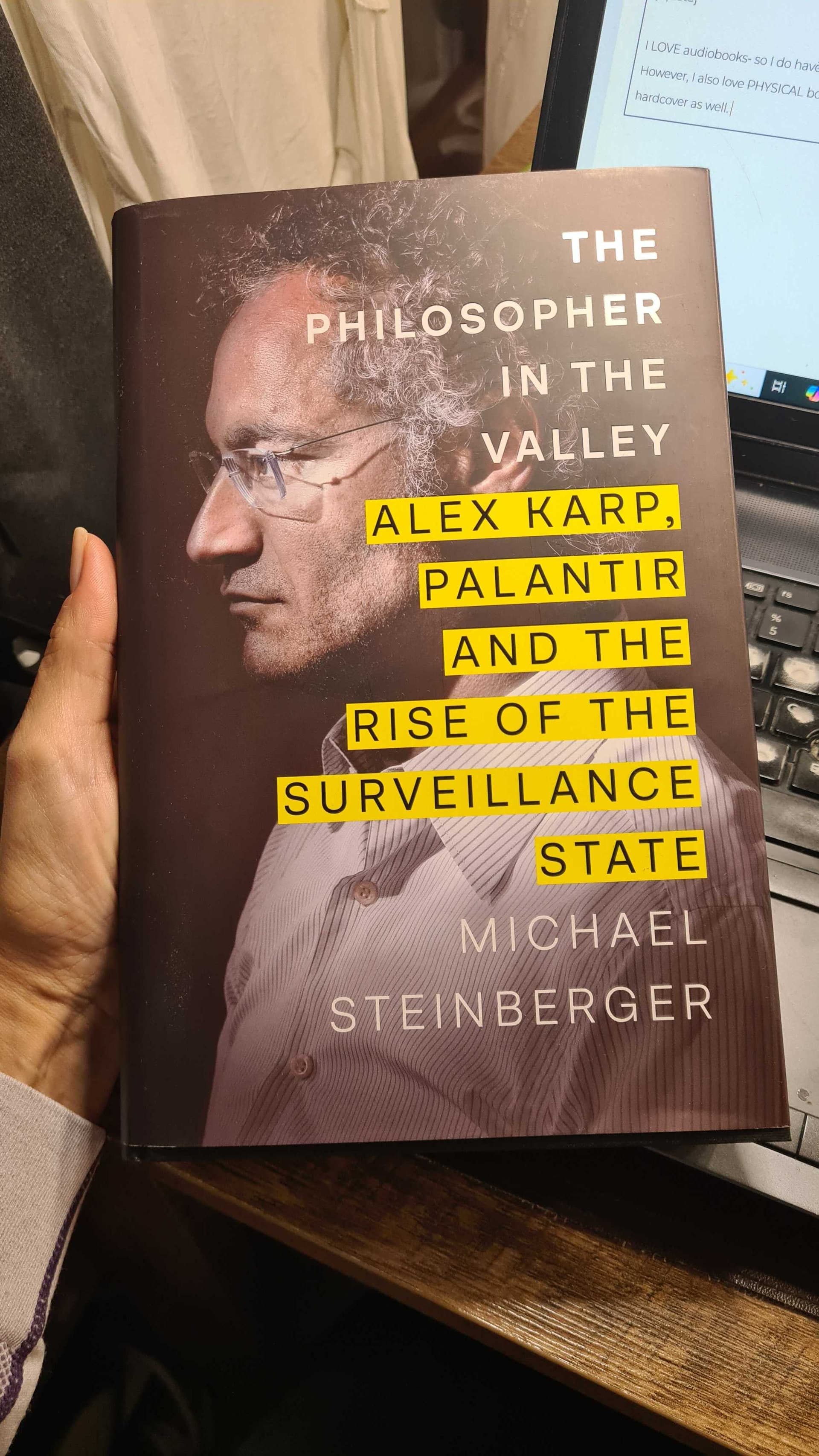
I LOVE audiobooks- so I do have an Audible subscription. I’ve had one for over 20 years. However, I also love PHYSICAL books. So, when I REALLY love a book, I will buy the hardcover/ or softcover as well (depending what’s available).

This is my latest acquisition. Just got it this weekend.

1 Like

Related to that book, check out Rob Braxman’s list of data threats of U.S. citizens, starting at 13:50 in this video:

https://rumble.com/v74kpy6-palantir-kills-people-but-what-if-the-real-villain-is-closer-to-home.html?start=830

There’s an interesting consideration on the cost here as well. streaming services appear to be cheaper, you can watch as much as you want for $20/m or whatever. But there’s a time cost, streaming services want your attention and in doing so pull you away from other more edifying things.

A 4k bluray for example, is also about $20. if you only watch one a month (or one new one a month), your on par with streaming services and own the movie. but standard blur ays are often only around maybe $10-12, giving you much more value. And if watching with others (recommended imo) you reduce that cost per person significantly.

no worry it will disappear in the future, no need for the internet, no need to continue to pay just to access your movies. the only consideration might be space, which when it comes to minimalism is a consideration. But you could always sell your dvd once you no longer want to watch it… you cant sell your streaming service.

overall unless you’re addicted to media, I expect dvds/blurays are cheaper, better quality, and less exploitative than streaming.

on minimalism, its not just about physical clutter, digital clutter is a real thing (As I expect everyone here knows). and there’s a real impact on your mind when you have access at an instance to 10s of thousands of shows and movies. you haven’t got rid of the clutter, its not minimised, its there, just digitally.

3 Likes

I really hate monthly subscriptions and try to keep them to a minimum. In theory an amount like $15/month for Audible (for example) makes sense for how much time my kids spend listening to audiobooks but I am not comfortable letting them freely on audible so I choose to purchase their audiobooks instead of subscribing. It probably costs about the same as an annual subscription. I also prefer to pay for shipping on Amazon rather than having Prime if I really need something from Amazon. It keeps me from purchasing what I don’t need. Every so often I will subscribe to writers on substack but I always end up canceling because I don’t have the time to keep up with all the content that is being put out there. If we want to watch a movie we rent it, because it may be a handful of times a year, not worth streaming. In the past we did have Netflix and having a subscription does mean spending more time ‘using’ it, but that is not really what we want to spend our time on, so we cancelled it and haven’t missed it.

2 Likes

I don’t like subscriptions in general. They do give a feeling of having something more accessible and sometimes it may help indeed, but the whole CI/CD + Agile + making software development a regularly paid service (for steady income flow) has a downside of software that’s never a complete product - everything becomes like that. It’s in resonance with some people’s idea to make people not own things and be more carefree (which is not a good thing long-term), while they can own the means of consumption… because someone has to own what you are renting, right?

2 Likes

Thanks for this! You reminded me that I formerly would make sure that I had the requisite total in my Amazon order (originally US$25, but now something like US$35?) to get free shipping. I also remember when an Amazon Prime annual subscription was US$79 without Prime Video – in contrast to today’s ~US$150 with Prime Video but now with advertising interstitials.

1 Like

As in this! –

1 Like